
The Bloat-Free Promise: Why Maltitol Is the Enemy
In This Article
You know the experience: you eat a "healthy" protein bar in the afternoon, and two hours later you are uncomfortably bloated and gassy. The culprit is almost always maltitol — a sugar alcohol that has been the default sweetener in "sugar-free" and "low-sugar" snacks for two decades because it is cheap and tastes reasonably close to sugar.
The GI consequences of maltitol are not a minor inconvenience. They are the reason that no fake sugar chocolate has become such a strong selling point — people are done with the compromise of "healthy" snacks that ruin their afternoon. Understanding what maltitol does in your gut, and why it does it, helps you avoid it confidently by reading labels.
Why Maltitol Causes Bloating
Maltitol is a sugar alcohol produced by hydrogenating maltose (a disaccharide found in starch). It has approximately 75% of the sweetness of sucrose and about half the calories — which is why food manufacturers use it. The problem is absorption: only about 50% of maltitol consumed is absorbed in the small intestine.
The remaining 50% travels to the large intestine, where bacteria ferment it. Bacterial fermentation of unabsorbed sugar alcohols produces hydrogen, methane, and carbon dioxide — the gases responsible for bloating, cramping, flatulence, and in higher doses, diarrhea. This is an osmotic and fermentative process, not an allergy or sensitivity — it happens to virtually everyone who consumes sufficient maltitol.
The effective dose for GI distress is lower than most people expect. A single protein bar often contains 15-20g of maltitol. Bloating symptoms have been reported in research at doses as low as 30g — meaning two bars in a day is often enough to cause significant discomfort. Compare this to what you read in the nutrition label guide and you will see why "sugar free" is not the safety signal it appears to be.
The Other Sugar Alcohols Ranked
Not all sugar alcohols are equally problematic. Sorbitol and xylitol are worse than maltitol — sorbitol is particularly aggressive, causing diarrhea at doses as low as 10g in sensitive individuals. Xylitol is roughly equivalent to sorbitol in GI impact but also acutely toxic to dogs (a useful reminder of its biological activity).
Isomalt and lactitol sit in the moderate range — better tolerated than maltitol for most people but still fermentable at sufficient doses. Erythritol is the best-tolerated sugar alcohol by a significant margin: 90% is absorbed in the small intestine, leaving relatively little for colonic fermentation. However, erythritol has its own concerns for different reasons — see the full erythritol safety update for the cardiovascular research.
The safest sweeteners from a GI perspective are not sugar alcohols at all — they are allulose (a monosaccharide absorbed and excreted with minimal fermentation) and monk fruit extract (a concentrate with no fermentable component). This is why understanding what allulose actually is matters for anyone building a sustainable healthy snacking habit.
The Bloat-Free Alternative
The only way to guarantee a bloat-free healthy chocolate snack is to choose one that uses neither sugar nor fermentable sweeteners. Allulose and monk fruit deliver sweetness without the absorption-fermentation problem because they do not reach the large intestine in fermentable form. This is not a marketing claim — it is a biochemical property of how these molecules are processed.
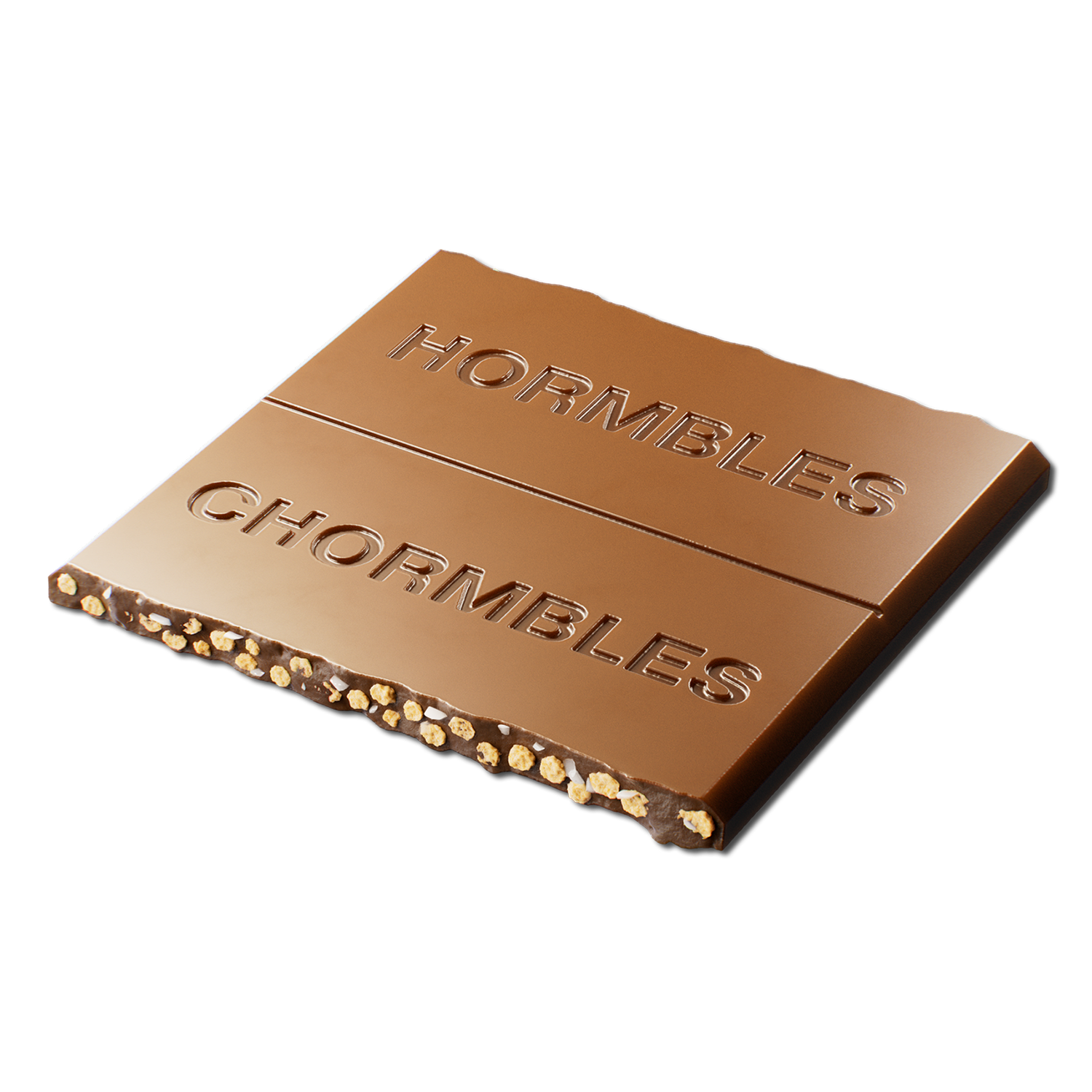
Hormbles Chormbles uses allulose and monk fruit precisely because the GI consequences of maltitol and erythritol were unacceptable from a daily-use perspective. You should not have to choose between eating a satisfying chocolate snack and spending the afternoon uncomfortable. The zero-sugar chocolate category has evolved beyond sugar alcohols — the question is just whether your current brand has caught up.
If you are on GLP-1 medications, the case for avoiding maltitol is even stronger — the protein gap on Wegovy article explains why fermentable sweeteners are particularly problematic when GLP-1 medication has already sensitized your digestive system. For a full sweep of what to look for and avoid on labels, see how to spot hidden problem ingredients in healthy bars.
GI impact of common sweeteners in healthy snacks
- Sorbitol: Severe GI impact — diarrhea at 10-20g
- Xylitol: Severe GI impact at moderate doses
- Maltitol: Significant GI impact — bloating and gas common above 30g
- Isomalt/Lactitol: Moderate GI impact
- Erythritol: Low GI impact but cardiovascular concerns emerging
- Allulose: Minimal GI impact — absorbed and excreted with little fermentation
- Monk fruit: No GI impact
Frequently Asked Questions
Why do "sugar free" snacks cause bloating?
Most sugar-free snacks use sugar alcohols — primarily maltitol, sorbitol, or xylitol — as sweeteners. These compounds are only partially absorbed in the small intestine. The unabsorbed portion travels to the large intestine, where bacteria ferment it and produce gas. The resulting hydrogen, methane, and CO2 cause the bloating, cramping, and flatulence that people associate with "healthy" snacks. The effect is biochemical and happens to virtually everyone at sufficient doses.
What is the bloating threshold for maltitol?
Research has documented GI symptoms at maltitol doses as low as 30g in most people, with sensitive individuals experiencing effects at lower doses. A single typical protein bar contains 15-20g of maltitol — meaning two bars in a day can reliably cause bloating. Individual threshold varies based on gut microbiome composition, eating speed, and concurrent food intake, but there is no population for which unlimited maltitol consumption is GI-neutral.
Are sugar alcohols bad for you?
Sugar alcohols range significantly in impact. As a category, they cause GI distress through colonic fermentation, and erythritol has emerging cardiovascular concerns. They are not acutely dangerous in small amounts for most people. However, given that cleaner alternatives like allulose exist with no GI impact and no safety concerns, there is little compelling reason to consume significant quantities of fermentable sugar alcohols daily in a snacking context.
Can I eat maltitol if I have IBS?
Maltitol is a high-FODMAP ingredient and is specifically identified in the low-FODMAP dietary protocol as an ingredient to avoid for people with IBS. The colonic fermentation that causes bloating in healthy individuals is significantly amplified in people with IBS, where the gut microbiome and motility patterns are already dysregulated. For anyone with IBS, maltitol should be treated as a complete avoidance ingredient regardless of the serving size listed on the label.
What should I look for on labels to avoid bloating from snacks?
Scan the ingredient list for any ingredient ending in "-itol" — maltitol, sorbitol, xylitol, erythritol, isomalt, lactitol — and the total "Sugar Alcohol" line on the nutrition facts panel. Avoid any snack with more than 5g of sugar alcohols per serving as a daily staple. Safe sweetener alternatives are allulose (listed by name), monk fruit extract (listed as "monk fruit" or "luo han guo"), and stevia (which causes taste issues but not bloating).